

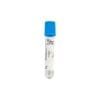
Drawing blood from neonatal and pediatric patients is never straightforward — veins are smaller, and the available blood volume is limited. When your laboratory or hospital needs accurate coagulation testing (PT, aPTT) without drawing excess blood from a fragile infant, the Sodium Citrate 3.2% Micro Pediatric Blood Collection Tube from Nasmed Diagnostic is built exactly for this need. It is specially designed for neonates, infants, and low-body-weight patients, delivering reliable, reproducible coagulation results even from a minimal sample volume.
What Is a Sodium Citrate 3.2% Micro Pediatric Tube?
A Sodium Citrate 3.2% Micro Pediatric Tube is a specialized blood collection device pre-filled with buffered sodium citrate anticoagulant. This additive binds calcium ions to prevent the blood from clotting, keeping the coagulation status of the sample stable until it reaches the lab for testing. The “micro” design means the tube’s draw volume is significantly lower than standard adult tubes — making it ideal for pediatric, neonatal, and geriatric patients where venous access is limited and every drop of blood matters.
Key Features & Specifications
| Specification | Details |
|---|---|
| Anticoagulant | Buffered Sodium Citrate 3.2% (Trisodium Citrate, 9NC) |
| Blood-to-Additive Ratio | 9:1 (per international coagulation testing standards) |
| Recommended For | Neonates, infants, pediatric & low blood-volume patients |
| Cap Color Code | Light Blue (universal coagulation tube identifier) |
| Tube Material | Medical-grade PET/PP, non-toxic, shatter-resistant |
| Draw Type | Micro-volume, low-vacuum draw for gentle collection |
| Common Tests | PT (Prothrombin Time), aPTT, coagulation factor assays |
| Shelf Life | As per batch expiry printed on pack (typically 12–18 months) |
| Sterility | Sterile, single-use, individually quality-checked |
Please replace the values above with your exact verified specifications (fill volume in ml, tube dimensions, pack quantity, HSN code) before publishing.
How Sodium Citrate Works as an Anticoagulant?
Sodium citrate chelates (binds) calcium ions, temporarily halting the coagulation cascade and keeping the blood in a stable, liquid state. For coagulation tests such as PT and aPTT, this is critical — even a slightly incorrect blood-to-citrate ratio can distort results, particularly in neonatal patients with abnormal hematocrit levels. This is why globally accepted phlebotomy protocols emphasize the exact fill volume and proper mixing technique for citrate tubes. For a detailed, internationally recognized procedure, refer to the WHO’s official guidelines on drawing blood, hosted by the U.S. National Library of Medicine (NIH).
Why Choose Nasmed’s Micro Pediatric Sodium Citrate Tubes?
- Accurate Fill Volume: Consistent draw volume in every tube, maintaining the correct 9:1 blood-to-citrate ratio.
- Neonatal-Safe Design: Gentle, low-vacuum draw suited to delicate neonatal and pediatric veins.
- Reliable Coagulation Results: Lab-grade accuracy for PT and aPTT testing.
- Quality-Controlled Manufacturing: Every batch undergoes quality checks before dispatch.
- Wide Availability: Available for both bulk and retail orders — explore our full range on the Nasmed products page.
Recommended Applications
This tube is primarily used for coagulation-related diagnostic tests, including:
- Prothrombin Time (PT) / INR
- Activated Partial Thromboplastin Time (aPTT)
- Fibrinogen level testing
- NICU and pediatric ICU coagulation monitoring
- Pre-surgical coagulation screening in infants
Sodium Citrate 3.2% vs Other Micro Pediatric Tubes: Comparison Table
Different pediatric tests require different additives. The comparison table below will help you select the right tube for your test panel:
| Tube Type | Additive | Cap Color | Primary Use |
|---|---|---|---|
| Sodium Citrate 3.2% Micro Pediatric Tube | Buffered Sodium Citrate (9NC) | Light Blue | Coagulation studies (PT, aPTT) |
| K3 EDTA Micro Pediatric Tube | Tripotassium EDTA | Lavender/Purple | CBC / Hematology testing |
| Lithium Heparin Micro Pediatric Tube | Lithium Heparin | Green | Plasma chemistry, electrolyte panels |
| Clot Activator Micro Pediatric Tube | Clot Activator (no anticoagulant) | Red/Gold | Serum chemistry & serology testing |
Who Should Use This Tube?
This tube is ideal for laboratories, hospitals, and diagnostic centers that regularly work with NICU, pediatric ward, or low-blood-volume patients. If your facility performs neonatal coagulation panels, pre-operative screening, or routine pediatric PT/aPTT testing, this tube should be an essential part of your sample collection workflow.
How to Order?
For bulk quantities, distributor pricing, or custom pack sizes, browse Nasmed Diagnostic’s complete product range or reach out directly to our team via the contact us page. You can also visit the official Nasmed Diagnostic website to learn more about the company.
Frequently Asked Questions (FAQs)
1. What is a Sodium Citrate 3.2% Micro Pediatric Tube used for?
- This tube is primarily used for coagulation testing — such as PT (Prothrombin Time) and aPTT (Activated Partial Thromboplastin Time) — especially in neonates and pediatric patients where the available blood volume is limited.
2. What blood-to-additive ratio should a sodium citrate tube have?
- The standard recommended ratio is 9 parts blood to 1 part sodium citrate. Maintaining this exact ratio is essential for accurate coagulation results, as outlined in international phlebotomy guidelines.
3. Is this tube safe for neonatal patients?
- Yes, this tube is specifically designed with a micro-volume, low-vacuum draw to enable gentle blood collection from neonatal and pediatric patients while minimizing unnecessary blood loss.
4. What is the difference between a Sodium Citrate tube and a K3 EDTA tube?
5. Where can I order this tube?
- You can browse Nasmed Diagnostic’s products page or reach out via contact us for bulk orders and pricing.
Accurate coagulation testing is critical to the safety of neonatal and pediatric patients. Choose Nasmed Diagnostic’s Sodium Citrate 3.2% Micro Pediatric Blood Collection Tubes for reliable, gentle, and precise sample collection in your lab. For bulk pricing or a sample request, contact our team today.