
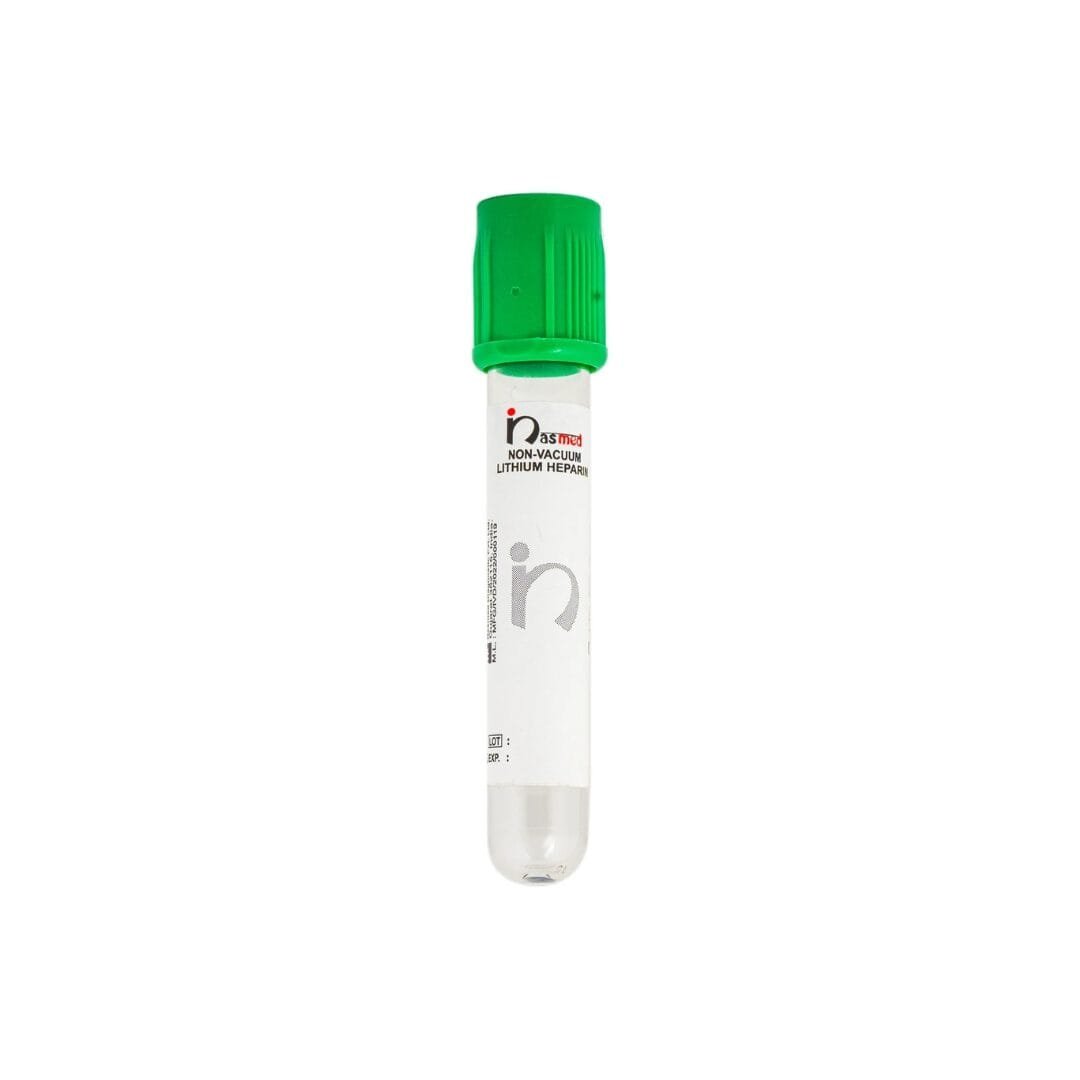
A Lithium Heparin Micro Pediatric Blood Collection Tube is a low-volume specimen tube coated with lithium heparin anticoagulant, designed specifically for drawing small blood samples from neonates, infants, and pediatric patients for plasma-based biochemistry and clinical chemistry testing. Because it requires only a minimal blood draw, it reduces trauma to small veins while still yielding a diagnostically reliable plasma sample.
Manufactured by Nasmed Diagnostic, this micro tube is built for labs, hospitals, and NICUs that need dependable pediatric specimen collection without compromising on sample quality or patient safety.
What Is a Lithium Heparin Micro Pediatric Tube Used For?
Lithium heparin acts as an anticoagulant by inhibiting thrombin and thromboplastin activity in the blood, which prevents clotting and allows plasma to be separated by centrifugation rather than waiting for serum to form. This makes the tube ideal for urgent or stat biochemistry tests where faster turnaround time matters — a critical factor in neonatal and pediatric care where rapid results guide treatment decisions.
Because the tube is engineered in a “micro” format, it draws only a fraction of the blood volume needed by standard adult tubes, which is essential given the limited total blood volume in infants and young children.
Key Features & Technical Specifications
- Anticoagulant: Lithium Heparin (spray-coated, uniformly distributed to prevent micro-clot formation)
- Sample Type: Plasma (whole blood collection, plasma separated via centrifugation)
- Draw Volume: Low-volume micro format suitable for capillary/venous pediatric draws
- Tube Material: Medical-grade, shatter-resistant plastic (PP/PS)
- Cap Color Code: Green (standard international color coding for heparin tubes)
- Design: Skirted conical base for stable centrifugation and easy handling
- Sterility: Sterile, single-use, non-pyrogenic
- Compliance: Manufactured under ISO quality standards for in-vitro diagnostic devices
- Labeling: Pre-printed patient-identification label area for error-free sample tracking
Lithium Heparin vs Other Pediatric Micro Tubes: Comparison Table
Choosing the right anticoagulant tube depends entirely on the test being ordered. Use this comparison to identify which Nasmed pediatric micro tube fits your requirement:
| Tube Type | Anticoagulant/Additive | Sample Type | Primary Use | Cap Color |
|---|---|---|---|---|
| Lithium Heparin Micro Pediatric Tube | Lithium Heparin | Plasma | Biochemistry, electrolytes, stat chemistry panels | Green |
| Clot Activator Micro Pediatric Tube | Clot Activator | Serum | Routine serum chemistry, serology, hormone assays | Red/Yellow |
| K3 EDTA Micro Pediatric Tube | K3 EDTA | Whole Blood | CBC, hematology, blood grouping | Lavender |
| Sodium Citrate 3.2% Micro Pediatric Tube | Sodium Citrate 3.2% | Plasma | Coagulation studies (PT, APTT) | Blue |
This side-by-side view helps clinicians and lab technicians pick the correct tube on the first draw — reducing repeat pediatric venipunctures, which is a key patient-safety priority in neonatal care.
Clinical Applications & Recommended Tests
The Lithium Heparin Micro Pediatric Tube is commonly used for:
- Liver function tests (LFT)
- Kidney function tests (KFT/RFT)
- Electrolyte panels (sodium, potassium, chloride)
- Blood gas and ammonia levels
- Stat/emergency biochemistry in NICU and pediatric ICU settings
- Therapeutic drug monitoring requiring rapid plasma separation
Proper order-of-draw and specimen-handling practices matter significantly in pediatric phlebotomy to avoid contamination and hemolysis. For a detailed, internationally recognized reference on correct blood-draw technique, see the WHO Guidelines on Drawing Blood: Best Practices in Phlebotomy, hosted by the U.S. CDC.
How to Use the Lithium Heparin Micro Pediatric Tube?
- Confirm patient identity and select an appropriate pediatric venipuncture or capillary site.
- Collect blood directly into the tube up to the marked fill line — never overfill or underfill, as this affects the blood-to-anticoagulant ratio.
- Gently invert the tube 8–10 times immediately after collection to mix the lithium heparin evenly and prevent micro-clots.
- Label the tube with patient details as per your lab’s protocol.
- Centrifuge as per your lab’s SOP to separate plasma for testing.
- Store or transport the sample under recommended temperature conditions until analysis.
Why Choose Nasmed’s Lithium Heparin Micro Pediatric Tube?
- Designed specifically for the low blood-volume needs of pediatric and neonatal patients
- Consistent anticoagulant coating ensures accurate, clot-free plasma samples
- Manufactured under strict quality-control processes for diagnostic reliability
- Backed by Nasmed Diagnostic’s experience in manufacturing blood collection consumables for laboratories across India
- Bulk and institutional supply available for hospitals, diagnostic labs, and NICUs
Explore Nasmed’s complete diagnostics range on the Nasmed Diagnostic homepage or browse the full catalog on the Our Products page.
Explore Our Complete Pediatric Tube Range
Pair this tube with the right complementary options for complete pediatric panels:
- Clot Activator Micro Pediatric Tube — for serum-based chemistry tests
- K3 EDTA Micro Pediatric Tube — for CBC and hematology
- Sodium Citrate 3.2% Micro Pediatric Tube — for coagulation testing
Frequently Asked Questions (FAQs)
Q1. What is a Lithium Heparin Micro Pediatric Tube used for?
- It’s used to collect small plasma blood samples from infants and children for biochemistry tests such as liver function, kidney function, and electrolyte panels, where fast plasma separation is needed.
Q2. Why is lithium heparin preferred over other anticoagulants for pediatric samples?
- Lithium heparin prevents clotting without significantly altering electrolyte or chemistry values, and it allows plasma to be obtained faster than serum tubes, making it ideal for stat pediatric biochemistry testing.
Q3. How much blood does a micro pediatric tube collect?
- Micro pediatric tubes are designed to draw a much smaller volume than standard adult tubes, minimizing blood loss in neonates and infants — check the specific fill-volume marking on the tube for exact capacity.
Q4. Can the Lithium Heparin Micro Pediatric Tube be used for CBC tests?
- No. CBC and hematology tests require an EDTA tube. For pediatric CBC, use the K3 EDTA Micro Pediatric Tube instead.
Q5. What is the correct way to mix a lithium heparin tube after collection?
- Gently invert the tube 8–10 times immediately after the draw. Do not shake vigorously, as this can cause hemolysis and affect test results.
Q6. Is this tube suitable for neonatal ICU use?
- Yes, the micro format is specifically suited for low blood-volume draws common in NICU and pediatric ICU settings.
Q7. Where can I buy Nasmed’s Lithium Heparin Micro Pediatric Tube in bulk?
- You can enquire directly through the Contact Us page or browse the full product catalog on the Our Products page.
Order Your Lithium Heparin Micro Pediatric Tubes Today
For institutional pricing, bulk orders, or product samples, get in touch with Nasmed Diagnostic’s team via the Contact Us page, or explore our full range of blood collection consumables at nasmed diagnostic.