
Urine Container: Types, Uses, and How to Choose the Right One
A urine sample is stored in a clean, leak-proof container from the time it is collected until it is sent to the lab. It is used by doctors for pregnancy tests, drug screening, infection screenings, and basic urinalysis. A subpar container has the potential to contaminate the sample and skew the outcome. This tutorial describes these containers, their types, how to properly collect a sample, and how to select the best one for your lab or clinic.
What Is a Urine Container?
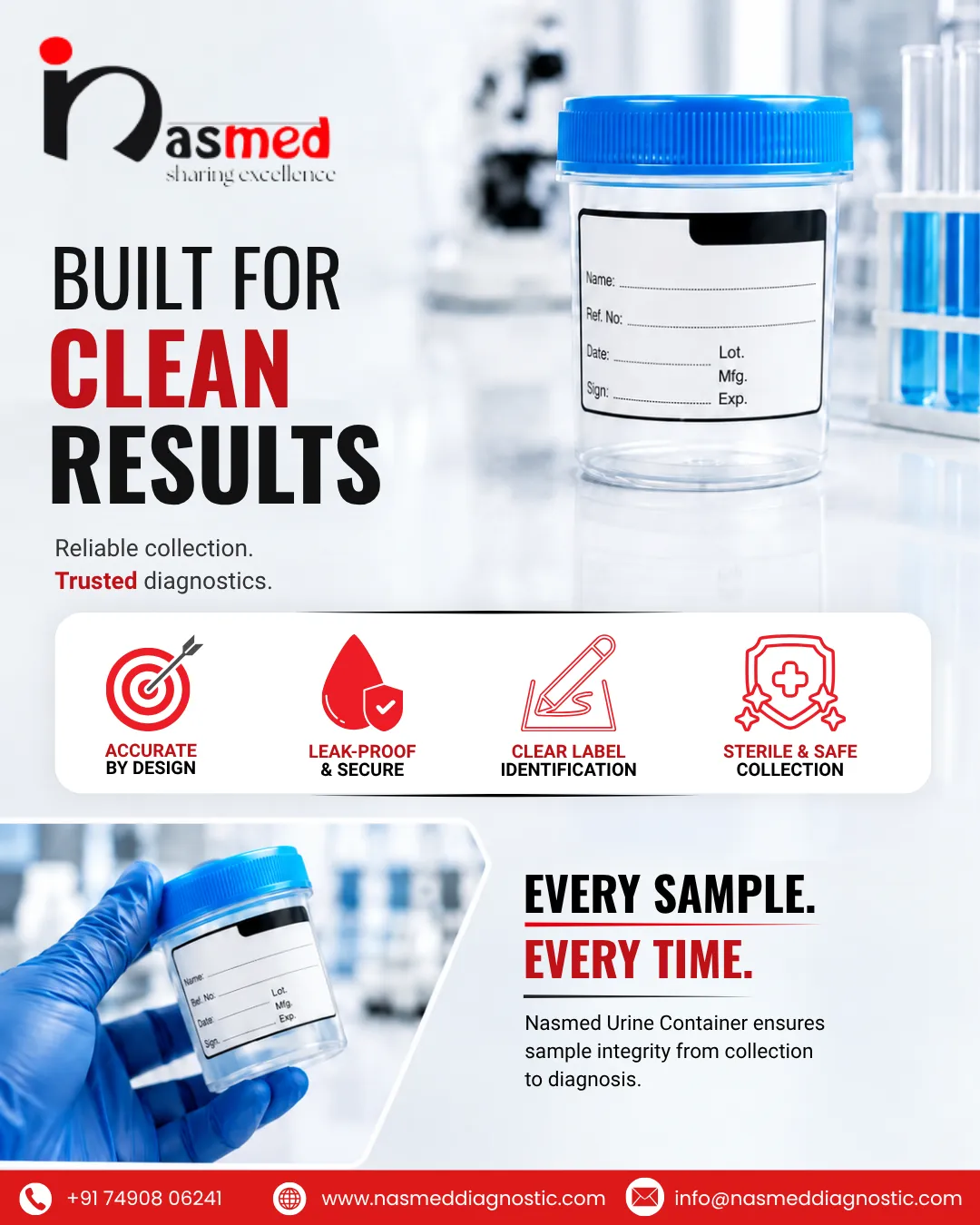
A urine sample container is a single-use medical device with a single purpose: maintaining the safety and purity of a specimen. It has a label area, a graded body, and a screw cap. Because medical-grade polypropylene is resistant to chemicals, lightweight, and does not break during transportation, manufacturers employ it.
This basic gadget is essential to hospitals, clinics, occupational health centres, diagnostic laboratories, and home testing programmes.
Why the Right Container Matters
After collection, urine undergoes rapid changes. Chemical levels change, bacteria proliferate, and cells degrade. Accuracy is safeguarded and harm is slowed down by a dependable container. Additionally, it
- prevents contamination from external sources
- stops leaks when being transported
- maintains the patient’s identification linked to the specimen
- satisfies regulatory and laboratory requirements
- minimises patient delays and repeat testing
Types of Urine Container
Different designs are required for different testing. These are the five most prevalent varieties.
1.Sterile Receptacles
These fit urine culture and infection tests, where even a few stray germs might alter the outcome. They are individually packaged and sterile inside.
2.Containers That Are Not Sterile
These are used in labs for regular chemical and physical examinations when sterility is not necessary.
3.Containers for 24-Hour Collection
These big containers, which are typically 2 to 5 litres, may store all of the voids for a day. Doctors may evaluate kidney function, protein loss, hormone levels, and metabolic problems with the use of a 24-hour urine collection container.
4.Preservative-Containing Containers
A stabiliser within the vessel is required for some tests. Hormone indicators, cell shape, and chemical content are all preserved until examination.
5.Options for Children
Smaller, gentler, and more manageable collecting methods are required for infants and young children.
Contact UsCommon Uses
- Diagnosis: Physicians look for renal illness, diabetes, liver disorders, urinary tract infections, and dehydration.
- Drug testing: Urine tests are used by employers, sports organisations, and legal teams.
- Pregnancy testing: A urine sample is the first step in many lab procedures.
- Regular screening: A urinalysis may identify issues before they manifest as symptoms.
- Chronic disease monitoring: Individuals with renal disease or diabetes get routine testing.
Learn more about urinalysis from MedlinePlus.
Key Features to Look For
A good urine specimen container should offer these features:
| Feature | Why It Matters |
|---|---|
| Leak-proof screw cap | Prevents spills and cross-contamination |
| Sterile packaging | Protects culture accuracy |
| Graduated markings | Confirms the correct volume |
| Wide mouth | Makes collection easier and cleaner |
| Label area | Reduces sample mix-ups |
| Medical-grade plastic | Resists chemicals and breakage |
How Much Urine Does a Test Need?
The test determines the volume. Typical quantities are:
- Urinalysis on a regular basis: 30 to 60 mL
- 20 to 30 mL of urine culture
- 30 to 45 mL for drug testing
- Test for pregnancy: 20 to 30 mL
Always adhere to the guidelines provided by your laboratory.
How to Collect a Urine Sample Correctly
For a clean-catch midstream sample, do the following actions:
- Use soap and water to wash your hands.
- Without touching the rim or inside of the cap, open the urine specimen container.
- Use a sterile wipe to clean the genital region.
- Move the container into the stream after starting to urinate into the toilet.
- After filling to the desired level, use the restroom to finish.
- Tightly screw on the cap.
- Put your name, the time, and the date on it.
- Within two hours, deliver it to the lab.
Common Mistakes to Avoid
- Touching the container’s inside. Bacteria are added as a result.
- Utilising common jars. The sample is only protected by an appropriate urine collecting container.
- Collecting too little. Testing may be delayed by low volume.
- Keeping the lid open. In transportation, the sample can leak.
- Too much waiting. The most trustworthy findings come from fresh samples.
How Long Can a Urine Sample Stay in the Container?
Test the sample within two hours of collection. If that is not possible, refrigerate it. Many laboratories accept refrigerated samples for up to 24 hours, but storage rules vary by test, so follow your lab’s protocol.
Can You Reuse a Single-Use Specimen Cup?
No. Single-use designs are more hygienic and lower contamination risk.
How to Choose the Right Container
Before making a purchase, consider these questions:
- What test are you going to run?
- What is the required sample size?
- Is sterility required for the test?
- How far will the sample travel?
- Is the provider properly certified?
Why Choose Nasmed Diagnostics?
Nasmed Diagnostics Pvt. Ltd. manufactures reliable diagnostic disposables for hospitals, clinics, and laboratories across India. Here is why buyers trust us:
- Certified quality: We hold CDSCO certification.
- Contamination-free production: Our products are made in an ISO 7 clean room facility (Class 10,000).
- Expert leadership: Directors Kush Patel and Suril Shah lead a skilled team of technicians and quality experts.
- Wide range: We supply urine collection containers, vacuum and non-vacuum blood collection tubes, micro and paediatric tubes, cell-free DNA tubes, gel lithium heparin tubes, and custom lab disposables.
- Global standards: Our materials follow international guidelines.
- Fair pricing and support: You get affordable rates and responsive service.
Explore our full range on the Nasmed Diagnostics website.
FAQs
Q.What is the purpose of a urine container?
- Urine samples are collected, stored, and transported for use in medical diagnostics. During laboratory analysis, it lowers the danger of contamination and safeguards sample quality.
Q.What distinguishes sterile containers from non-sterile ones?
- Sterile containers are suitable for culture experiments and are devoid of germs. In regular testing when sterility is not necessary, non-sterile versions work well.
Q.For a pee test, how much urine is required?
- Most tests need between 20 and 60 mL. Follow your doctor’s or the lab’s instructions since the precise dosage varies depending on the test.
Q.What is the maximum duration that urine may remain in a collecting container?
- Within two hours, test it. If it is delayed, store it in the refrigerator according to the instructions provided by your laboratory.
Q.Can I get a sample from any clean jar?
- No, household jars may harbour germs or residue. Use the appropriate urine specimen container at all times.
Q.What materials are used to make these containers?
- The majority are composed of medical-grade polypropylene. It is strong, light, resistant to chemicals, and appropriate for use in a lab.
Q.What distinguishes a 24-hour collecting container from a regular one?
- Indeed. Urine collected over the course of a day may be stored in its considerably higher volume, often 2 to 5 litres.
Conclusion
Despite its straightforward appearance, a urine container affects the precision of all urine tests. Reliable findings are produced by the appropriate kind, appropriate collecting procedures, and prompt delivery.
Nasmed Diagnostics Pvt. Ltd. provides CDSCO-certified goods manufactured in an ISO 7 clean room facility to hospitals, clinics, and laboratories. Survey No. 282 (Old Block No. 213 Paiki), Nandoli, Gandhinagar, Gujarat 382115, India is our address.
Are you prepared to place an order or want a quote?
Ready to order or need a quote?
- Phone: +91 79908 01393
- WhatsApp: +91 74908 06241
- Email: info@nasmeddiagnostic.com