
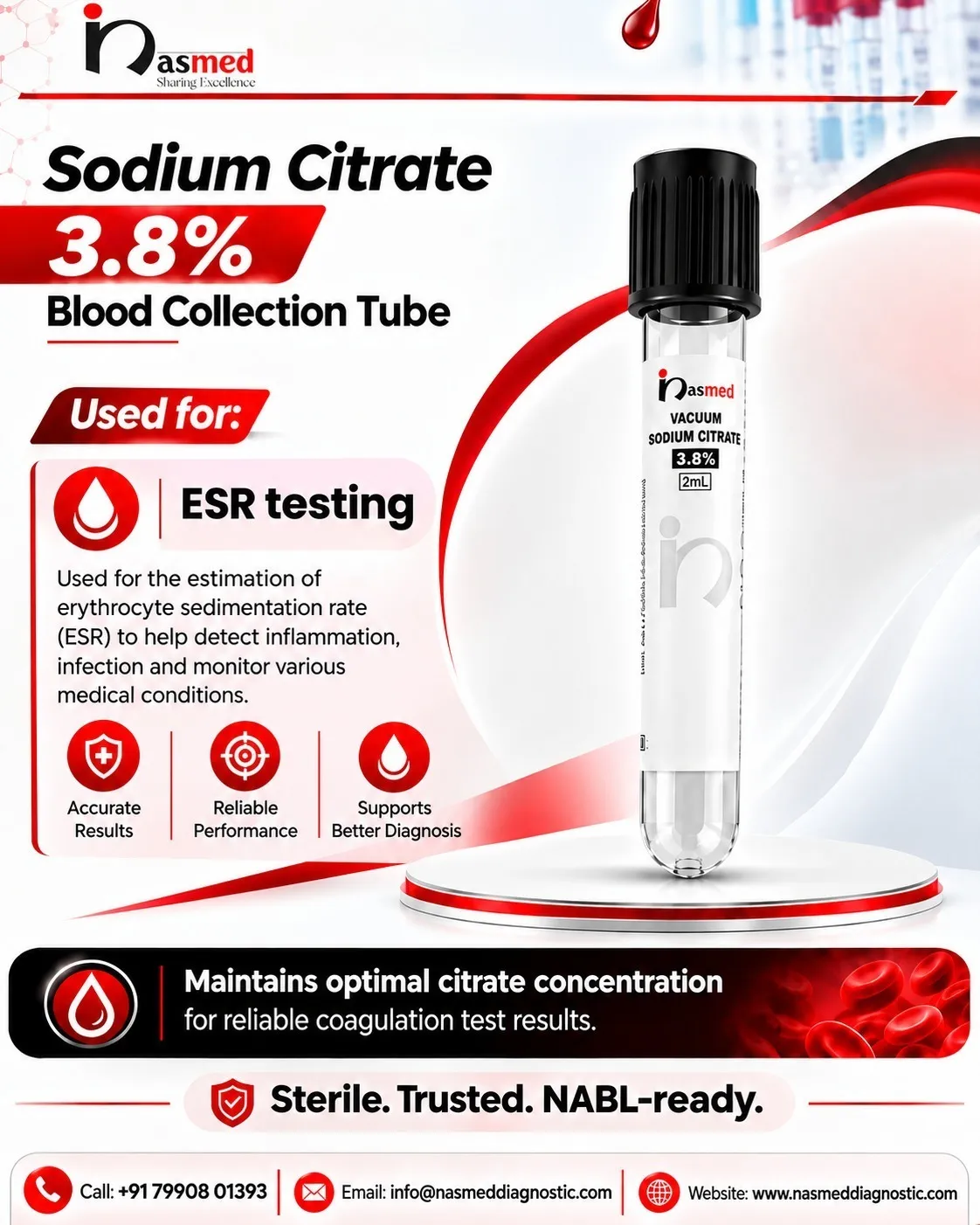
Sodium Citrate Blood Collection Tubes: Uses, Types and Best Practices
Sodium citrate blood collection tubes are the standard choice for clotting studies in every modern laboratory. Without them, a lab cannot measure how fast a patient’s blood clots. This guide explains how they work, where labs use them, and how to handle them correctly. You will also learn how to pick a dependable supplier.
What Are Sodium Citrate Blood Collection Tubes?
These tubes hold a liquid solution of sodium citrate, an anticoagulant. They carry a light blue closure, so staff call them the light blue top tube. The colour code helps phlebotomists pick the right tube quickly and avoid mix-ups.
Sodium citrate binds calcium ions in the blood. Calcium drives the clotting cascade, so the blood stays liquid once calcium is bound. Better still, the clotting factors stay intact. The lab can add calcium back later and measure clotting time accurately.
How a Citrate Blood Tube Works
A citrate blood tube follows a simple four-step process:
- The vacuum draws blood into the tube.
- Sodium citrate mixes with the blood and binds calcium.
- The lab centrifuges the tube to separate platelet-poor plasma.
- The analyser adds calcium and records the clotting time.
This reversible action sets citrate apart from other additives. EDTA, for example, binds calcium far too strongly for clotting studies.
Why the 9:1 Blood-to-Additive Ratio Matters
The tube contains a fixed volume of citrate solution. Labs need nine parts of blood for every one part of citrate. An underfilled tube holds too much citrate relative to blood. This error can falsely prolong clotting times and lead to wrong clinical decisions.
Always fill the tube to the marked level. Most laboratory protocols reject tubes that fall noticeably short of the fill line.
Main Uses in Coagulation Tests
Coagulation tests depend on the light blue top tube. Typical examples include:
- Prothrombin Time (PT) and INR: Doctors use these to monitor warfarin therapy.
- Activated Partial Thromboplastin Time (aPTT): This test screens for factor deficiencies and monitors heparin therapy.
- Fibrinogen and D-dimer: These support the diagnosis of clotting and bleeding disorders.
- Factor assays: Labs use them to identify conditions such as haemophilia and von Willebrand disease.
- Pre-surgical screening: Surgeons confirm a patient’s blood will clot normally before an operation.
Because so many critical decisions rely on these results, tube quality directly affects patient safety.
3.2% vs 3.8% Sodium Citrate
Two concentrations exist. Most laboratories now prefer 3.2% sodium citrate tubes. Guidance from the Clinical and Laboratory Standards Institute (CLSI) recommends this strength for coagulation testing. It gives more consistent results on modern analysers and reduces variation between labs.
The 3.8% strength is less common today. Some older protocols still use it. Always match the tube strength to your analyser and reagent instructions.
Sodium Citrate vs Other Blood Collection Tubes
| Tube | Cap colour | Additive | Main use |
|---|---|---|---|
| Sodium citrate | Light blue | Sodium citrate | Coagulation tests |
| EDTA | Lavender | EDTA | Complete blood count |
| Lithium heparin | Green | Heparin | Plasma chemistry |
| Serum tube | Red or gold | Clot activator or gel | Serum biochemistry |
Never substitute one tube for another. Each additive suits a specific test, and the wrong tube ruins the sample.
Best Practices for Collection and Handling
Follow these steps to protect sample quality:
- Respect the order of draw. Collect blood culture bottles first, then the citrate tube, then the serum, heparin, and EDTA tubes. This order prevents additive carry-over.
- Use a discard tube when needed. If you draw with a butterfly set, draw a discard tube first so air in the tubing does not cause underfilling.
- Fill to the line. Aim for the full stated volume.
- Mix gently. Invert the tube three to four times right after collection. Never shake it.
- Transport promptly. Deliver samples to the lab quickly and follow your own SOP for time limits. Aim to keep the sample at room temperature.
- Check expiry dates. An expired citrate blood tube may lose anticoagulant performance.
Common Mistakes to Avoid
Labs often face these avoidable problems:
- Underfilled tubes that distort PT and aPTT results
- Slow or traumatic draws that activate clotting
- Poor mixing that leaves micro-clots in the sample
- Wrong order of draw that contaminates the citrate tube
- Storing tubes in extreme heat or direct sunlight
Training phlebotomy staff on these points costs little and improves result accuracy.
How to Choose a Reliable Supplier
Look for these qualities when you buy tubes in bulk:
- Regulatory approval, such as CDSCO certification in India
- Contamination-free manufacturing in a clean room
- Accurate fill volumes and a consistent citrate concentration
- Secure caps and stable vacuum across the shelf life
- Responsive support and clear delivery timelines
A cheap tube that fails a quality check wastes more money than it saves.
Why Choose Nasmed Diagnostics?
Nasmed Diagnostics Pvt. Ltd. manufactures premium diagnostic disposables in Gandhinagar, Gujarat. Directors Kush Patel and Suril Shah lead the company. A skilled team of technicians and quality experts supports them. Here is what sets the company apart:
- ISO 7 clean room manufacturing: The Class 10,000 facility supports contamination-free production.
- CDSCO certified: Hospitals and labs can buy with confidence.
- Wide product range: The portfolio covers vacuum, non-vacuum, micro and paediatric tubes, cell-free DNA tubes, and gel lithium heparin tubes. It also includes urine containers.
- Custom lab disposables: The team builds solutions around your workflow.
- Global material standards: Products follow international material guidelines.
- Affordable pricing and reliable support: Hospitals, clinics, and labs across India trust the brand.
Address: Survey No 282 (Old Block No 213 Paiki), Nandoli, Gandhinagar, Gujarat 382115, India Phone: +91 79908 01393 | WhatsApp: +91 74908 06241 | Email: info@nasmeddiagnostic.com
Frequently Asked Questions
Q.What are sodium citrate blood collection tubes used for?
- Sodium citrate blood collection tubes are used for coagulation tests such as PT, INR, aPTT, fibrinogen, and D-dimer. They keep blood liquid while preserving clotting factors for accurate analysis.
Q.What colour is a sodium citrate tube?
- A sodium citrate tube has a light blue cap. Labs call it the light blue top tube, and the colour distinguishes it from lavender EDTA and green heparin tubes.
Q.How does sodium citrate prevent clotting?
- Sodium citrate binds calcium ions in the blood. Without free calcium, the clotting cascade cannot proceed. The lab restores calcium during testing to trigger controlled clotting.
Q.Why is the blood-to-citrate ratio 9:1?
- The 9:1 ratio ensures the correct amount of anticoagulant for each sample. A wrong ratio changes the calcium balance and can falsely prolong clotting times.
Q.Which concentration is best for coagulation testing?
- Most laboratories prefer 3.2% sodium citrate. It delivers consistent results on modern analysers. Always check your analyser and reagent instructions.
Q.What happens if a citrate tube is underfilled?
- An underfilled tube contains too much citrate for the blood volume. This can give falsely prolonged PT and aPTT results, so most labs reject such samples.
Q.Can I use a citrate tube for a complete blood count?
- No. EDTA tubes are the right choice for a complete blood count. Citrate tubes dilute the sample and are designed for coagulation studies only.
Q.Where can I buy quality sodium citrate tubes in India?
- Choose a CDSCO-certified manufacturer with clean room production. Nasmed Diagnostics supplies blood collection tubes to hospitals, clinics, and labs across India.
Conclusion
Sodium citrate blood collection tubes protect the accuracy of every clotting test. Correct fill volume, gentle mixing, and the right order of draw keep results reliable. Quality matters just as much as technique, because a poorly made tube can undermine the whole process.
Nasmed Diagnostics Pvt. Ltd. offers CDSCO-certified tubes made in an ISO 7 clean room in Gandhinagar. Contact the team on +91 79908 01393, message them on WhatsApp at +91 74908 06241, or email info@nasmeddiagnostic.com to request samples or a quote.