
Right-Sized Micro Blood Collection Tubes for Newborns & Infants at a Children’s Hospital
Right-sized blood collection for newborns and infants: less blood, fewer recollections, calmer families.
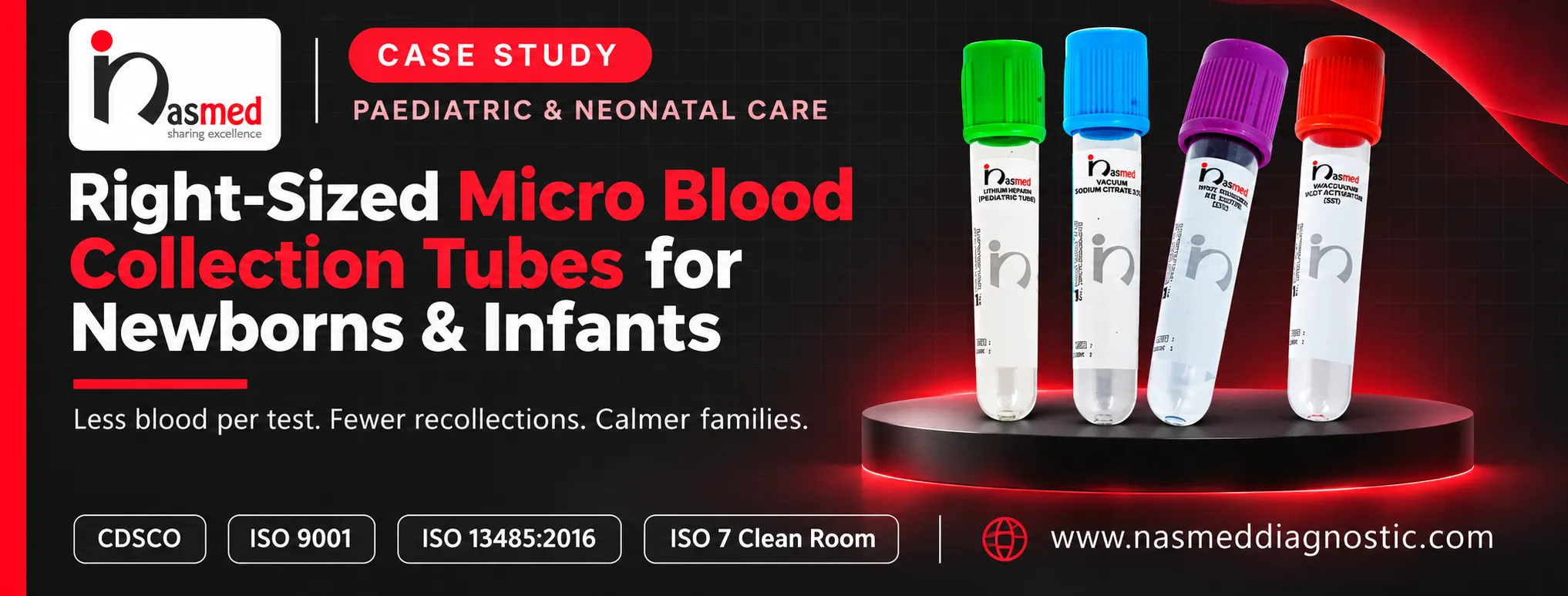
Case Study Details
A children's hospital with an active NICU, paediatric OPD and day-care ward needed blood collection tubes that respect the small blood volume of newborns and infants. This case study describes how Nasmed's Micro / Paediatric tube range helped the hospital collect accurate samples with minimal blood volume.
BACKGROUND In neonates, total blood volume is only a few tens of millilitres per kilogram of body weight. Frequent testing in premature or sick babies can contribute to iatrogenic blood loss, so every millilitre counts. The hospital performed a high number of CBCs, bilirubin and electrolyte tests, blood sugar checks and coagulation profiles every day, mostly through heel prick and fingerstick collection.
THE CHALLENGE
- Adult-size tubes needed more blood than a neonate can safely spare.
- Under-filled tubes gave a wrong additive-to-blood ratio. In EDTA tubes, excess EDTA shrinks red cells and affects counts; in citrate tubes, under-filling can distort clotting times.
- Slow collection from a tiny heel prick allowed blood to start clotting before it reached an EDTA tube, producing clots and unusable samples.
- Nurses working under time pressure needed easy-to-identify, easy-to-handle tubes.
THE SOLUTION Nasmed supplied its Micro / Paediatric range:
- Micro K3 EDTA tubes for neonatal and paediatric haematology and CBC
- Micro Clot Activator tubes for quick serum collection for biochemistry
- Micro Sodium Citrate tubes for precise paediatric coagulation tests The tubes are designed for low-volume collection, with accurate additive dosing for small fill volumes, clear fill marks and secure caps, all produced in our ISO 7 clean room in Gandhinagar, Gujarat.
HOW WE IMPLEMENTED IT?
- Needs mapping: we listed the hospital’s top paediatric tests and the minimum volume each required.
- Nurse training: a hands-on session for NICU and OPD staff covering fill marks, gentle mixing by inversion, labelling and safe disposal.
- Colour-coded organisation: staff were helped to arrange tubes in the collection trays by test type for faster selection.
- NICU buffer stock: a dedicated replenishment schedule ensured the NICU never ran short.
- Feedback loop: the hospital’s lab head shared monthly notes on clotted or short samples, which were tracked.
QUALITY ASSURANCE
- Accurate dosing of additive suitable for small-volume tubes
- Manufacturing under ISO 7 clean room conditions and ISO 13485:2016 quality systems
- Batch-level inspection and traceability
- Smooth, sterile design to reduce the risk of haemolysis
- CDSCO, ISO 9001, CE and GMP certified manufacturer
RESULTS
- The volume of blood needed for routine tests reduced noticeably, protecting small patients
- Recollections caused by clotted or under-filled samples fell by around 30 percent
- Nurses reported faster, more confident collection
- Parents experienced fewer repeat pricks, which improved their trust in the hospital
- The NICU maintained 100 percent stock availability during the review period
KEY LEARNINGS
- The right tube size is a patient-safety decision, not just a purchasing decision.
- Training nurses on fill and mixing prevents most paediatric sample problems.
- Dedicated NICU stock planning avoids last-minute substitution.
FREQUENTLY ASKED QUESTIONS
Q1. Why do newborns need special micro blood collection tubes?
- Newborns have a very small total blood volume, so adult-size tubes can require more blood than is safe to draw. Micro tubes are made for low-volume collection while keeping the additive-to-blood ratio accurate.
Q2. Which micro tubes does Nasmed offer for paediatric use?
- Nasmed offers Micro K3 EDTA tubes (haematology), Micro Clot Activator tubes (serum biochemistry) and Micro Sodium Citrate tubes (coagulation testing).
Q3. What happens if a paediatric tube is under-filled?
- Under-filling disturbs the blood-to-additive ratio. This can distort cell counts in EDTA tubes and clotting times in citrate tubes, which may lead to a recollection.
Q4. Are Nasmed’s micro tubes certified?
- Nasmed Diagnostics is a CDSCO-certified manufacturer with ISO 9001, ISO 13485:2016, CE and GMP credentials. Products are made in an ISO 7 clean room in Gandhinagar, Gujarat.
Q5. Can hospitals get a dedicated supply plan for NICU?
- Yes. Nasmed can arrange scheduled dispatch with buffer stock so critical units do not run short. Contact info@nasmeddiagnostic.com or WhatsApp +91 74908 06241.