
Leak-Free Vacuum Blood Collection Tubes for a Multi-City Pathology Network
How a multi-city pathology network replaced inconsistent tubes with a single certified vacuum range and cut sample rejections by over a third.
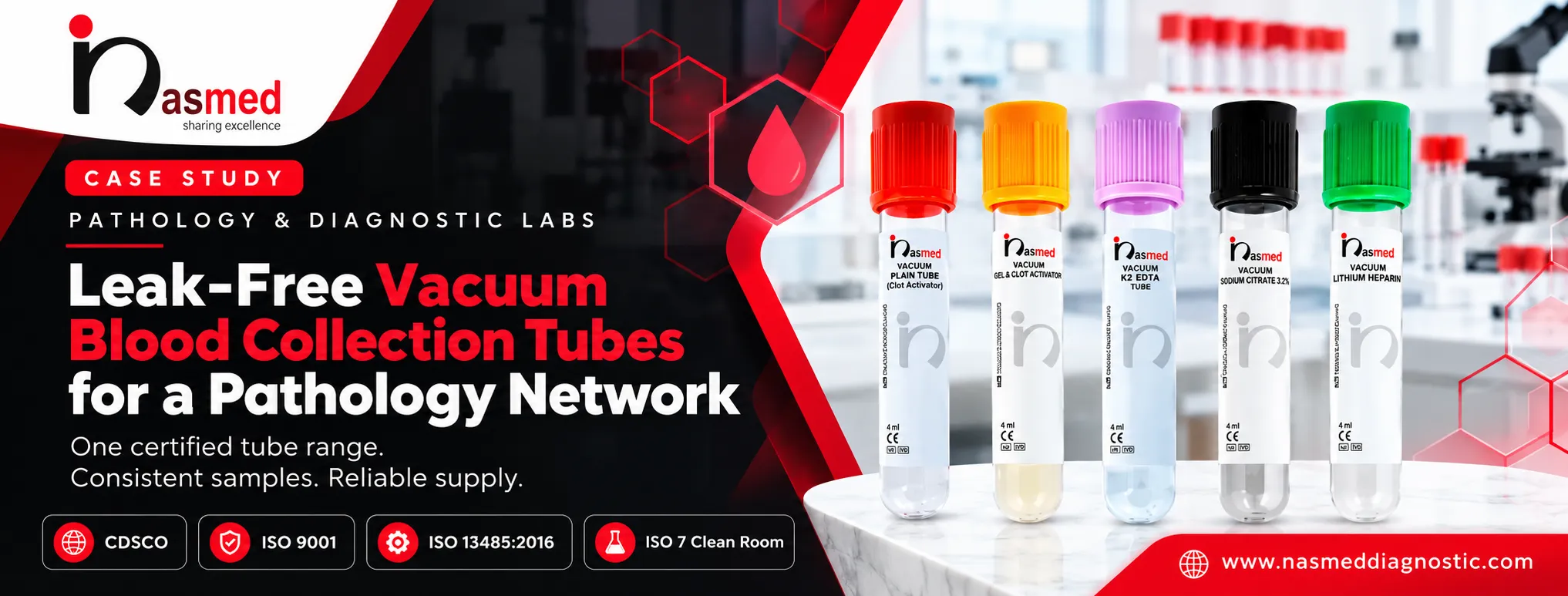
Case Study Details
OVERVIEW A fast-growing pathology laboratory network, with one central processing lab and dozens of collection centres across Gujarat, Maharashtra and North India, was running into a quiet but expensive problem: its blood collection tubes. This case study explains how moving to Nasmed's vacuum blood collection range improved sample integrity, reduced rejections and made supply predictable.
BACKGROUND The network handled several thousand blood samples every day. Most were drawn at small collection centres and then transported to the central lab by road, often for several hours, and in summer temperatures that can exceed 40 degrees Celsius. The lab was buying tubes from more than one supplier to manage cost and availability, which meant the quality of what reached the phlebotomist's hand changed from batch to batch.
THE CHALLENGE The lab’s quality team tracked rejected samples for three months and found a clear pattern:
- Leakage and loose caps: tubes arrived with blood on the rack or on the outside of the transport box, creating a biohazard and making the sample unusable.
- Inconsistent vacuum: some tubes under-filled, giving a wrong blood-to-additive ratio. Under-filled EDTA tubes affect cell morphology and counts; under-filled citrate tubes can falsely prolong PT/APTT.
- Poor serum separation: in some batches the gel barrier did not form a clean layer after centrifugation, leading to cell contamination of serum and repeat tests.
- Supply gaps: when a supplier ran short, centres improvised with tubes of different brands and sizes, confusing staff. Every rejected sample meant a repeat draw, a dissatisfied patient, a delayed report and a direct cost to the lab.
THE SOLUTION Nasmed Diagnostics proposed a single, matched vacuum tube range for the lab’s full test menu:
- Clot Activator tubes for serology and routine biochemistry
- Gel + Clot Activator tubes for clean, stable serum separation in high-volume biochemistry and immunoassay
- K2 EDTA tubes for CBC and haematology
- Sodium Fluoride tubes for blood glucose, preventing glycolysis between collection and testing
- Sodium Citrate 3.2 tubes for PT, INR and APTT coagulation tests
- Sodium Citrate 3.8 tubes for ESR All tubes are made in Nasmed’s ISO 7 clean room facility, supported by ISO 13485:2016 and GMP quality systems, and the company is CDSCO certified with ISO 9001 and CE credentials.
HOW WE IMPLEMENTED IT?
- Phase 1, Understanding: Our technical team visited the central lab and two collection centres to observe the full journey of a sample, from the draw to the analyser.
- Phase 2, Pilot: A pilot of selected batches was placed in five collection centres. Staff were guided on the correct draw order (citrate, then serum or gel tubes, then heparin, then EDTA, then fluoride), gentle inversion of additive tubes and correct storage.
- Phase 3, Validation: The lab compared results from Nasmed tubes with its earlier tubes on key analytes such as glucose, urea, creatinine, electrolytes, liver enzymes, CBC and PT/INR. Results were within the lab’s acceptable limits.
- Phase 4, Rollout: The supply was extended to all centres on a monthly dispatch schedule with buffer stock kept at the central lab. Phase 5, Review: Quarterly review calls to track rejections, feedback and forecast the next quarter’s demand.
QUALITY ASSURANCE BEHIND THE PRODUCT
- Manufacturing in a controlled ISO 7 environment with continuous air quality and particulate monitoring
- Batch-wise inspection of vacuum level, additive dosage, cap fit and label readability
- Leak testing and visual checks before packing
- Batch traceability so any query can be traced back to a production lot
RESULTS
- Leakage-related complaints during transport fell to near zero
- Sample rejections dropped by roughly 35 percent over the first six months
- Draw volume became consistent, so additive ratios stayed correct
- Serum separation was clean and stable across batches
- Deliveries were on time, so centres no longer needed to substitute tubes
WHY IT MATTERS?
The blood collection tube is the first step of every lab report. A reliable tube protects sample integrity, saves the lab the cost of repeats and, most importantly, spares the patient a second needle prick.
KEY LEARNINGS
- Standardising to one tube family removes confusion for phlebotomists.
- Training on draw order matters as much as the tube itself.
- Buffer stock and scheduled dispatch protect labs from supply shocks.