
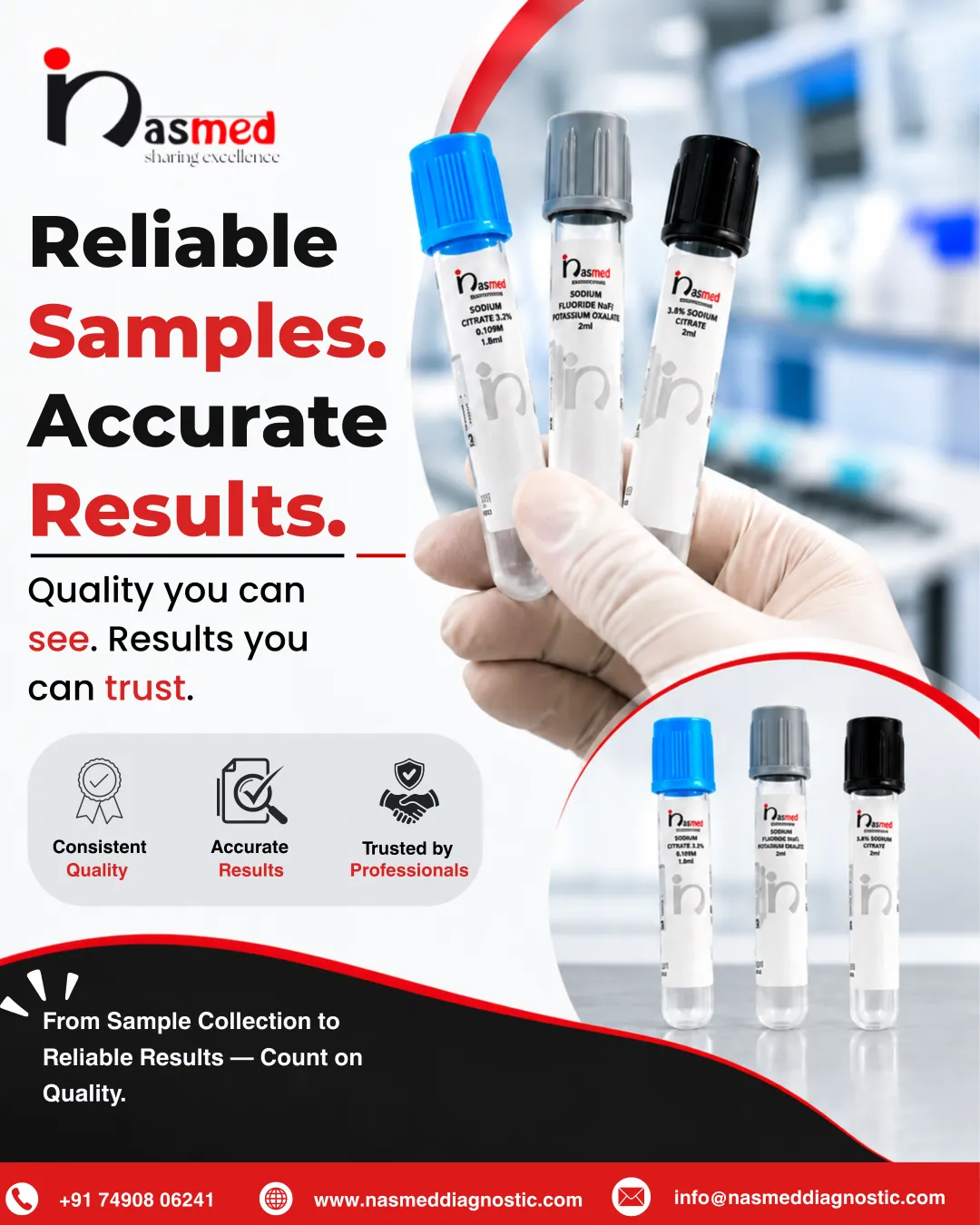
Reliable Blood Collection Tubes: Types, Uses & Buying Guide
Reliable blood collection tubes are the step, in every correct lab report. A bad tube can lead to broken blood cells, blood clots or mixing of the chemicals inside and each of these can affect the test result. Then the lab has to do the blood draw again the patient has to wait and the cost goes up. This guide talks about the types of tubes the chemicals they have the colors they are and the order in which they should be used. It also helps you learn how to pick tubes that you can trust.
Why Tube Quality Matters in Diagnostics
Studies consistently show that most laboratory errors happen before the sample reaches the analyzer. Tube quality plays a role in that pre-analytical phase. Good tubes protect three things:
Sample integrity: Accurate additive volume and a steady vacuum keep the blood-to-additive ratio
- Safety: Leak-proof caps and sterile interiors protect patients and staff.
- Speed: The right tube on the attempt means no recollection and no delay.
Hemolysis, which damages cells and skews results such as potassium is a common reason labs reject specimens. A made tube, with a smooth interior and a stable vacuum helps reduce that risk.
In short a dependable tube saves time, money and trust.
Blood Collection Tube Colors and Additives Explained
Blood collection tube colors tell you what additive sits inside. This simple code helps staff pick the right tube quickly. Here is a quick reference:
| Cap Color | Additive | Common Use |
|---|---|---|
| Red (plain) | None or clot activator | Serum chemistry, serology |
| Gold / Yellow (gel) | Clot activator + separator gel | Serum separation for routine chemistry |
| Light blue | Sodium citrate | Coagulation tests (PT, INR) |
| Green | Lithium or sodium heparin | Plasma chemistry |
| Lavender | EDTA (K2 or K3) | CBC and hematology |
| Gray | Sodium fluoride + potassium oxalate | Glucose testing |
Colors can vary slightly between brands. Therefore, always read the label before you collect.
Vacuum vs Non-Vacuum Tubes: Which One Fits Your Lab?
Vacuum blood collection tubes contain a pre-measured vacuum. The tube pulls in the exact blood volume, so the additive ratio stays precise. Staff also handle less blood, which lowers exposure risk. Most hospitals prefer vacuum blood collection tubes for routine adult venipuncture.
Non-vacuum tubes work well for syringe draws, fragile veins, and paediatric patients. Micro and paediatric tubes use small volumes, which suits infants and children. Specialized options also exist, such as cell-free DNA tubes and gel lithium heparin tubes.
Many labs keep both types in stock. The best choice depends on your patient mix and workflow.
The Standard Order of Draw
The order of draw prevents additives from carrying over between tubes. Follow this common sequence for plastic tubes:
- Blood culture bottles
- Light blue (sodium citrate)
- Red or gold (serum)
- Green (heparin)
- Lavender (EDTA)
- Gray (fluoride/oxalate)
Your institution may adapt this sequence, so check local protocols. You can also review the WHO guidelines on drawing blood and the standards at CLSI for more detail.
Contact UsHow to Choose Reliable Blood Collection Tubes
Not every tube on the market meets the same standard. Use this checklist before you place an order:
- Regulatory approval: Look for CDSCO certification.
- Clean-room manufacturing: An ISO 7 clean room limits particles and microbes.
- Material quality: Clear, shatter-resistant PET tubes improve safety and visibility.
- Additive accuracy: The correct additive amount protects test results.
- Vacuum consistency: Each tube should draw the labeled volume every time.
- Secure stoppers: Caps must seal firmly and open without spraying.
- Clear labeling: Batch number, expiry date, and fill volume should be easy to read.
- Supply support: Choose a partner who delivers on time and answers questions fast.
If you plan to source locally, shortlist a blood collection tubes manufacturer in India that publishes its certifications, supports bulk and custom orders, and responds quickly after the sale. Local production also shortens delivery time and makes replacements easier.
Storage and Handling Best Practices
Reliable blood collection tubes still need careful handling. Keep unopened tubes in a cool, dry place and away from direct sunlight. Do not freeze them, and check the expiry date before every use. After collection, mix additive tubes by gentle inversion, then keep them upright. Let gel and serum tubes clot fully before centrifugation. Finally, send samples to the lab within the time your protocol allows.
Common Mistakes That Compromise Samples
Even the best tube cannot fix poor technique. Avoid these frequent errors:
- Underfilling or overfilling tubes
- Ignoring the order of draw
- Skipping gentle inversion after collection
- Using expired tubes
- Storing tubes in heat or direct sunlight
- Labeling tubes late
Training your team on these basics improves results at no extra cost.
Why Choose Nasmed Diagnostics?
Nasmed Diagnostics Pvt. Ltd. is a trusted blood collection tubes manufacturer in India. Directors Kush Patel and Suril Shah lead a skilled team of technicians and quality experts. They work in a state-of-the-art ISO 7 clean room facility (Class 10,000), which supports contamination-free manufacturing.
Here is what sets Nasmed apart:
- CDSCO certified: Our products meet Indian regulatory requirements.
- Wide range: We make vacuum blood collection tubes, non-vacuum tubes, micro/paediatric tubes, cell-free DNA tubes, and gel lithium heparin tubes.
- More than tubes: We also supply urine containers and custom diagnostic lab disposables.
- Global material standards: Our products follow international material guidelines.
- Fair pricing: You get dependable quality at affordable rates.
- Responsive support: Our team helps with product selection and bulk orders.
Hospitals, clinics, and labs across India trust Nasmed for reliable blood collection tubes and accurate sample handling.
Frequently Asked Questions
Q.What makes blood collection tubes reliable?
- Reliable tubes combine sterile, clean-room manufacturing with accurate additive amounts, a consistent vacuum, and secure caps. Regulatory approval, such as CDSCO certification, also confirms quality.
Q.What do blood collection tube colors mean?
- Each cap color shows the additive inside. Lavender means EDTA for hematology, light blue means sodium citrate for coagulation, green means heparin, gray means fluoride for glucose, and red or gold means serum tubes.
Q.How should you store blood collection tubes?
- Store tubes in a cool, dry place away from direct sunlight and heat. Check expiry dates and follow the manufacturer’s storage instructions.
Q.What is the difference between vacuum and non-vacuum tubes?
- Vacuum blood collection tubes draw a preset blood volume automatically. Non-vacuum tubes suit syringe draws, small veins, and paediatric collection.
Q.Who is a trusted blood collection tubes manufacturer in India?
- Nasmed Diagnostics Pvt. Ltd. in Gandhinagar, Gujarat, is a CDSCO-certified manufacturer. It makes tubes in an ISO 7 clean room facility and serves hospitals, clinics, and labs across India.
Q.What is the correct order of draw?
- The standard order is blood culture, light blue, red or gold, green, lavender, and gray. This sequence prevents additive carryover and protects test accuracy.
Conclusion
Accurate results begin with the right tube. Know your tube colors, follow the order of draw, and pick tubes made under strict quality control. When you choose reliable blood collection tubes, you reduce errors, protect patients, and save valuable lab time.
Nasmed Diagnostics supports your lab with certified, affordable, and contamination-free products. Contact us today for samples, bulk orders, or custom requirements.
Nasmed Diagnostics Pvt. Ltd. Survey No 282 (Old Block No 213 Paiki), Nandoli, Gandhinagar, Gujarat 382115, India Phone: +91 79908 01393 | WhatsApp: +91 74908 06241 Email: info@nasmeddiagnostic.com Website: nasmeddiagnostic.com
Contact Us